
How diagnosis, medication, and good intentions may be protecting a world that’s making regulation impossible.
A child can’t see the board.
They squint,
lean forward,
narrow their eyes
until their whole face becomes a question.
Eventually, someone notices
a teacher, a parent, or the child themselves,
rubbing their forehead like it’s been quietly overworked.
Then comes the ritual:
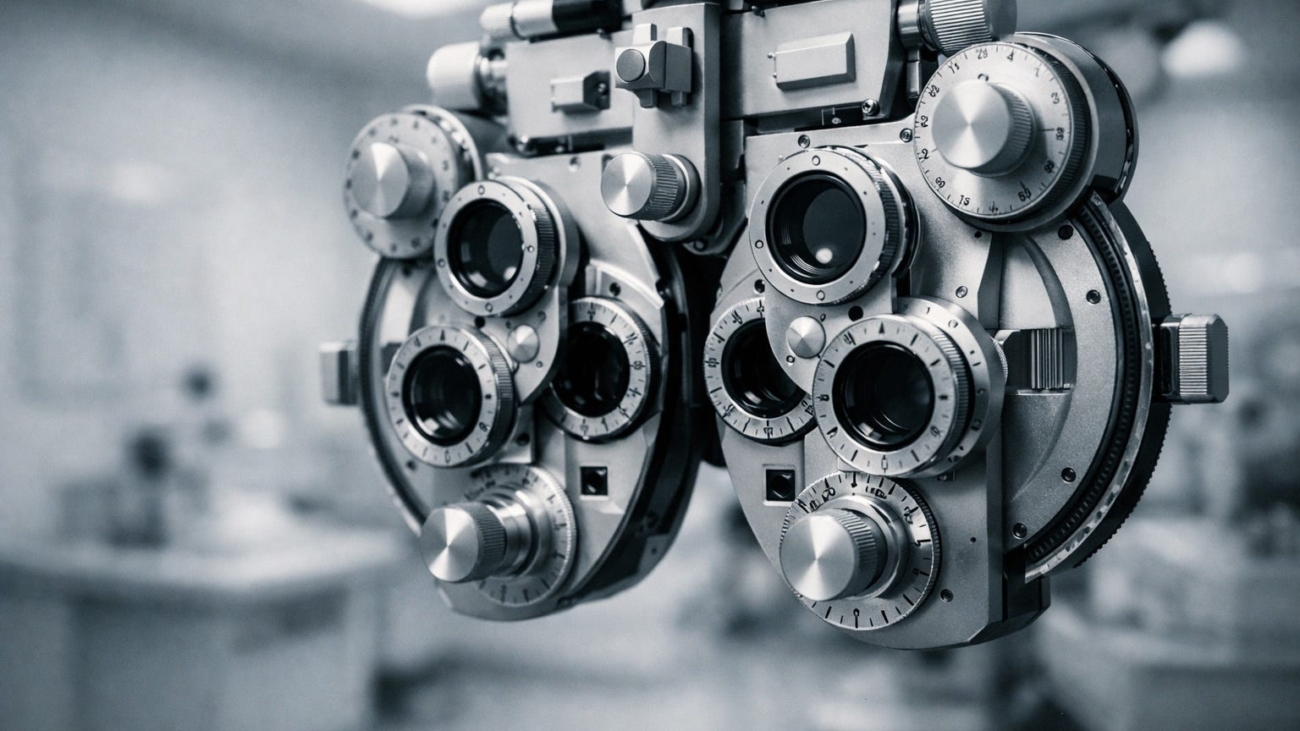
the optometrist,
the chair that tilts back,
the little house in the distance,
the click of lenses like a safecracker at work.
And then the moment.
The child walks outside
and the world snaps into focus.
Leaves become leaves, not green smudges.
Street signs stop being guesses.
Even their own face in the mirror looks newly real.
We hand them glasses
and call it help, and it is.
But we don’t stop there.
Almost immediately, we begin telling a story.
It runs in the family.
His dad had glasses at eight.
Everyone on my side has bad eyesight.
All of this is true.
Myopia is highly heritable.
And yet here is the detail
that should haunt every argument
we have about ADHD:
heritability never ended inquiry.
We did not treat genes as a stop sign.
We did not confuse correction with explanation.
We did not decide that
because eyesight was heritable,
nothing else mattered.
Because something had changed,
and it had changed fast enough
to notice in a single generation.
So we asked what changed.
We looked at near work,
indoor childhood,
schooling intensity,
screens,
artificial light,
and daylight exposure.
We argued about mechanisms
and tested prevention strategies.
We kept prescribing glasses
without pretending the glasses explained the epidemic.
We held two ideas simultaneously:
people vary in nature,
and the environment can…

Add a Comment
You must be logged in to post a comment