
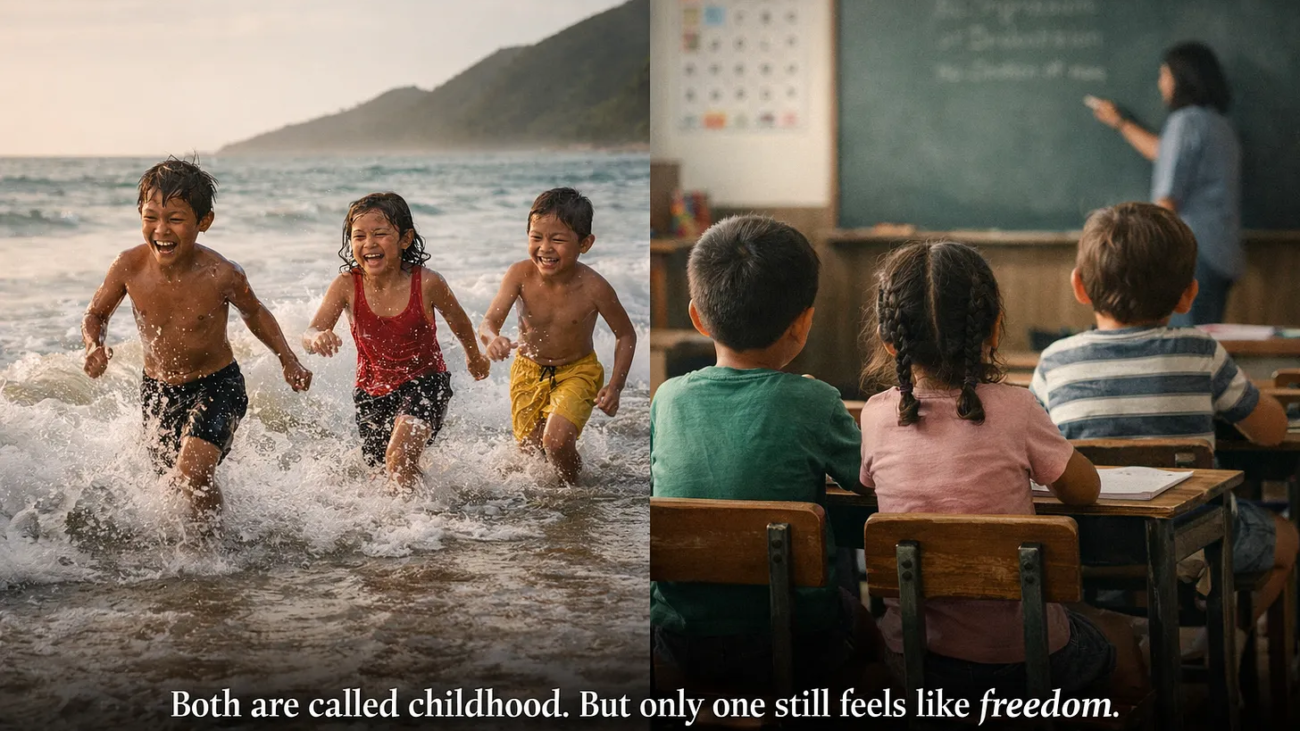
Sartre said that existence precedes essence.
I would argue that the Heideggerian brain inherits predispositions, but in the Anthropocene, society increasingly shapes which essences are realised.
We are not born as blank slates, but neither are we born as fixed destinies.
We are born with susceptibilities, potentials, and constraints, and then exposed to environments that stabilise some outcomes while suppressing others. In that sense, essence is no longer simply inherited. It is increasingly engineered by the worlds we build.
Sartre placed the burden on the individual to decide what his existence would become. But the Heideggerian brain forces a correction. Essence is not merely chosen, and it is not simply encoded in DNA. It is installed through the culture, practices, expectations, and material conditions into which the brain is thrown.
Society has always been part of that installation. What is new in the Anthropocene is that the environment is now so extensively human-made that the transmission of essence has itself become an artefact of our own design.
We are not simply inheriting ways of being. We are producing them.
That is why ADHD cannot be treated as merely an identity waiting to be discovered, and autism should not be exempt from the same scrutiny. Both are now commonly presented as timeless forms of human difference, patiently awaiting social recognition.
But that is already an interpretation.
It is not a scientific conclusion.
If modern environments can shift developmental trajectories, amplify certain traits, and consolidate them into recognisable phenotypes, then what we are looking at is not mere discovery. It is also a production.
This is the elephant in the room that the neurodiversity movement has spent years trying to avoid. The…

Add a Comment
You must be logged in to post a comment