
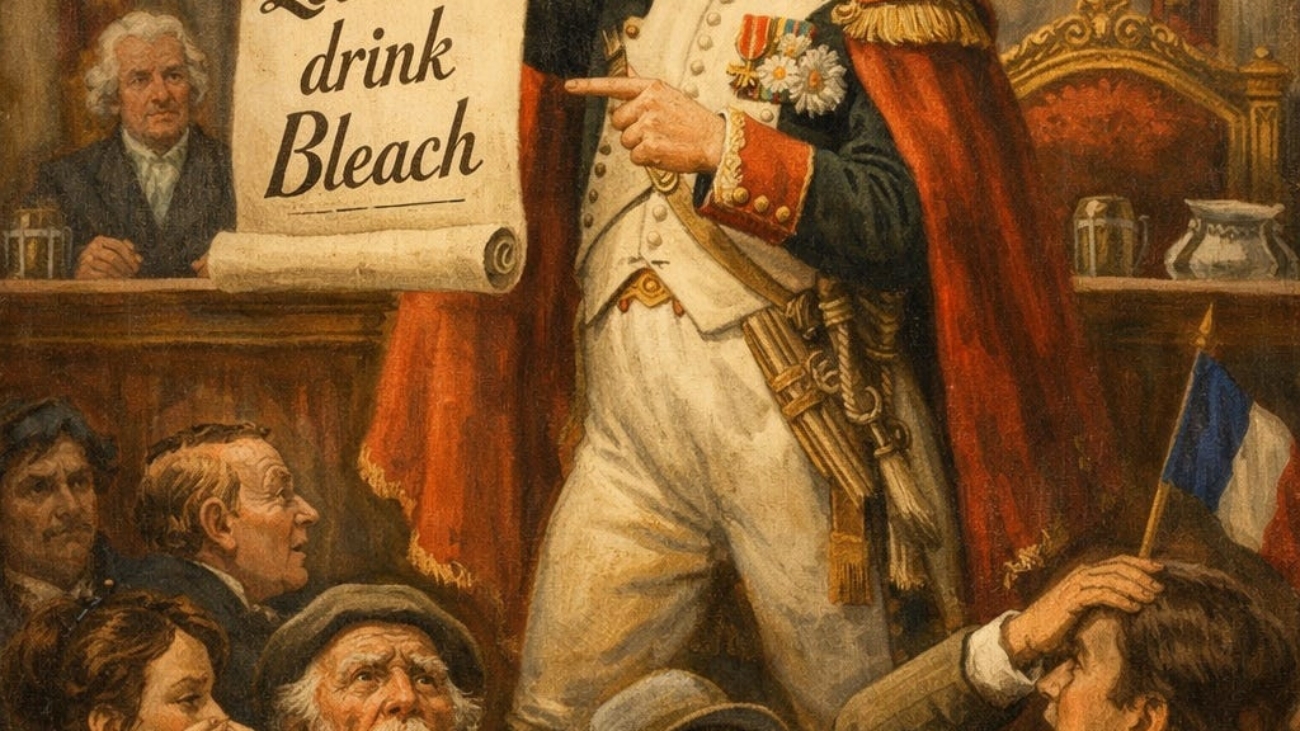
Ban Social Media? Or Reclaim Childhood?
Ricky Gervais once joked:
Remove the words ‘DO NOT DRINK’ from bottles of bleach.
Wait two years, and then hold a referendum.”
The joke is not about whether warning labels are useful.
It’s about why they’re needed in the first place.
In a functioning society, nobody drinks bleach.
The label exists because we have failed to
prepare people to recognise
the obviously destructive without being told.
The referendum comes later,
not to discover truth,
but because reality
has already filtered the sample.
That is the uncomfortable point:
Guardrails proliferate when judgment fails.
Asking the crowd what to do next is not wisdom.
It’s evidence of a prior collapse in leadership.
That frame matters because
the government has now called for a
“national conversation”
on whether social media
should be banned for under-16s.
The instinct is understandable.
Children’s mental health is a real concern.
Parents are anxious.
Headlines are relentless.
But the question itself is misframed.
This is not a technological problem
that improves with aggregated opinion.
It is a developmental and ecological problem.
Crowds do not adjudicate biology well.
Leadership exists precisely to decide
what is true enough to act on when
opinion is noisy,
incentives are misaligned,
and consequences are delayed.
Treating social media as the primary problem
mistakes symptom for cause.
Social media is a stimulus environment.
Whether a stimulus educates or hijacks
depends on the state of the organism encountering it.
Children are not passive recipients of harm;
they are developing nervous systems.
Their capacity to regulate attention, emotion, and behaviour
is shaped by sleep, movement, nutrition, relationships,
responsibility, boredom, and recovery.
When those conditions are robust,
screens are usually just…

Add a Comment
You must be logged in to post a comment