
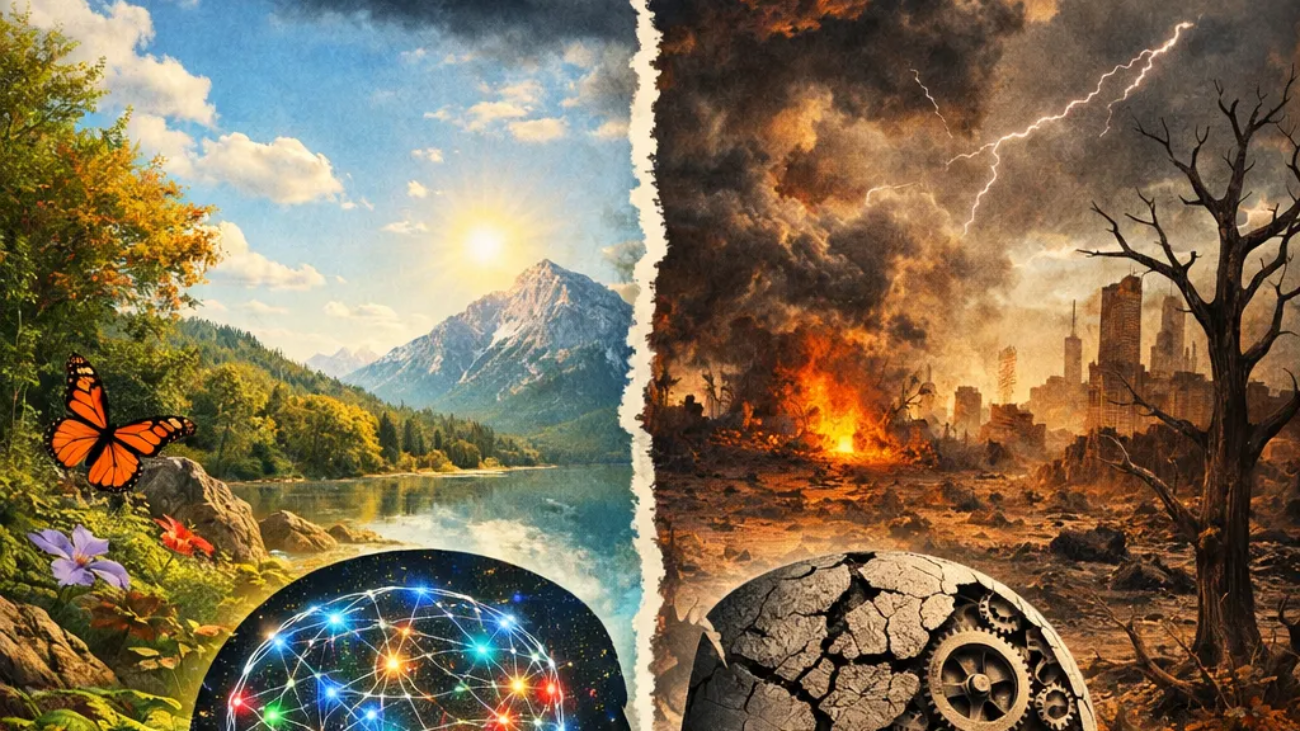
The fact of diversity is descriptive.
The claim that diversity is good is evaluative.
Those are not the same claim.
Yet somewhere along the way, we stopped noticing the difference.
“Diversity” began as a way of describing variation.
In public moral language, it has become a term of approval.
It no longer arrives neutrally. It arrives already haloed.
And once that happens, something important is lost.
Variation no longer needs to justify itself.
It no longer needs to be examined.
It no longer needs to be understood in terms of trade-offs, limitations, or costs.
It is simply affirmed.
That is the sleight of hand.
What has gone wrong here is not primarily empirical.
It is linguistic.
A descriptive term has quietly taken on an evaluative role, and the shift has gone largely unexamined.
We have confused the existence of difference with a positive judgement about that difference.
We have done it so thoroughly that questioning the move can now feel like a moral offence rather than an intellectual one.
The word “neurodiversity” sits squarely inside that confusion.
In much of its popular use, it draws some of its moral force from “biodiversity,” a term almost everyone instinctively approves of.
Diversity in nature suggests richness, resilience, and vitality.
It sounds balanced.
Harmonious.
Good.
But that image is sentimental.
Biodiversity is not a gentle ideal.
It is the visible outcome of a process that is indifferent, competitive, and often brutal.
It is shaped by selection, constraint, trade-off, and loss.
It includes failure, injury, and death.
We simply choose not to foreground those features when we use the word.
From a distance, nature looks harmonious.
Up close, it is red in tooth and…

Add a Comment
You must be logged in to post a comment